Work Sampling System | Fifth Edition
WSS-5
The Work Sampling System®, Fifth Edition (WSS-5), is an authentic, observational assessment customized for each grade level. By collaborating on real-life inputs between professionals and parents, WSS consists of three complementary elements used in connection with the existing curriculum: Developmental Guidelines, Developmental Checklists, and Family or Summary Reports. WSS helps professionals monitor children's developmental progress across a full range of domains via its standard version or Head Start-aligned version.- Publication date:
- 2013 (2014 Head Start version)
- Age range:
- Preschool 3 years through Grade 3
- Qualification level:
- A
- Scoring options:
- Work Sampling Online or manual scoring
- Other languages:
- Spanish
- Telepractice:
- Distance Learning and Work Sampling System
- Call us at 1-800-627-7271
- Complete this form
A103000110209 - WSS Subscription 1 Year Qty 1 (Digital) - $14.00
Includes access to all manuals, guides, and support components for WSS-5 and WSHS (Head Start version) on a web-based platform, per child per year.
The Work Sampling System is a criterion-referenced observational assessment with extensive research supporting reliability and validity. Whether in its traditional format or in its tailored Head Start version, this authentic assessment of behaviors and performances strengthens child/student motivation, assists teachers in instructional decision making, and serves as an effective means for reporting children's progress to families, professionals, and the community.
WSS-5 has two versions that offer flexibility for early childhood programs who wish to assess multiple domains. Both are available via the online system:
Standard version (7 domains)
- I Personal and Social Development
- II Language and Literacy (with performance indicators for English Language Learners)
- III Mathematical Thinking
- IV Scientific Thinking
- V Social Studies
- VI The Arts
- VII Physical Development, Health, and Safety
Head Start version (11 domains)
- I Physical Development & Health
- II Social & Emotional Development
- III Approaches to learning
- IV Logic & Reasoning
- V Language Development
- VI Literacy Knowledge & Skills
- VII Mathematics Knowledge & Skills
- VIII Science Knowledge & Skills
- IX Creative Arts Expression
- X Social Studies Knowledge & Skills
- XI English Language Development
Professionals use the Developmental Checklist to rate each child in a particular skill/domain:
- NY (Not Yet): The child has not yet demonstrated any development in this area.
- IP (In Process): The child is beginning to demonstrate some development in this area.
- PRO (Proficient): The child has developed to an age-appropriate level.
- NA (Not Applicable): The indicator is not applicable to the child.
- DNO (Did Not Observe): No evidence supporting an assessment in this area was collected; the behavior was not observed.
Using its Developmental Guidelines and Checklists along with Summary or Family Reports, WSS follows a multi-phase Assessment Cycle, up to three times each year:
- Ask questions—What should my students be learning?
- Collect Evidence—What are students showing about what they know?
- Interpret Evidence—What does the evidence mean and what does it tell me about the student(s)?
- Take Action—What's next? How do I apply this evidence in my instructional decisions?
Through documenting and evaluating individual performance of classroom-based tasks, WSS benefits professional teams and parents by:
- assisting teachers in documenting and evaluating students' skills, knowledges, and behaviors using actual classroom-based experiences, activities, and products
- enabling teachers to learn about their students by encouraging them to show what they know and what they can do when solving problems, writing in journals, constructing with blocks, painting with various media, doing experiments, or simply interacting with peers
- helping teachers better understand what they are teaching, what they need to work on, what students are learning, and what students have begun to master via a flexible framework for assessment rather than ranking students
Uses and Applications:
WSS can be used in assessment, intervention, and progress monitoring contexts. Professional users of this assessment may include home visitors, parent educators, family support staff, visiting nurses, public health nurses, and early interventionists.
Depending on the population(s) you serve, WSS may be used with:
- Individuals — private practice, daycare, home settings
- Groups — educational, community, government, or healthcare group practices/programs
Required Browser Versions:
Windows 10, 11 - Chrome (v140), Firefox (v142) and Microsoft Edge (v140) (current and previous two versions)
Mac (latest version) - Chrome (v140), Firefox (v142) and Safari (v18.6) (current and previous two versions)
Resources for WSS-5
Research Summaries
General
Yes. You can access historical student data through reporting tools for as long as that data remains in the system.
In Reports, select the academic year you need, then export the results. The main interface typically shows current-year information only.
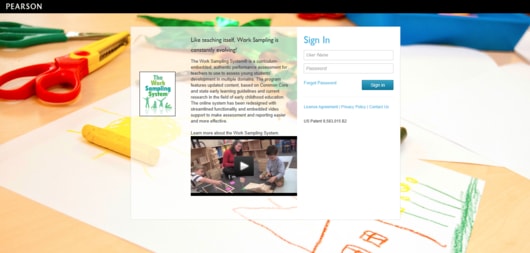
Select Forgot Password on the login page. Your password reset link will stay active for 24 hours. If you don’t see the email, check your spam folder and ask your email administrator to make sure system emails aren’t being blocked.
You’ll find resources, tutorials, and support information through the Resources and Contact Us links in the platform.
For Administrators
Go to Manage > Users and select the blue Add button, then choose New. Enter the required information and assign the appropriate role and site access. The role you assign determines the user’s permissions.
Select the checkmark next to the user’s name. Then select the blue User Actions button at the top of the list and choose Remove User. If the user belongs to multiple sites, remove them from every site before they can be fully removed from the system. Deleting a user may also remove associated checklist and progress data. If you may still need that data for reporting, lock the account instead.
Locking an account prevents the user from signing in while preserving their data. Deleting an account permanently removes the user and may also delete associated assessment data. If you may need historical reporting later, locking is the better option.
Go to Manage > Users and select the blue Add button, then choose Existing. Find the user and assign them to the additional site. They’ll keep the same login credentials across all assigned sites.
Go to Manage > Users and review the user’s assigned role. Then compare it with the permissions listed under Manage > Roles. A user’s access is based on the permissions assigned to their role.
First, check that the account is active and unlocked, and confirm that the correct username is being used. If needed, reset the login attempts and send a new password reset email.
Most organizations use Program and Site levels. Larger organizations may also include Brand and Organization levels. Administrators can view users and students at their own level and the levels below it.
No. Your license quantity stays the same unless you request a change.
Yes. Account ownership and account manager assignments can be updated when needed.
Administrators can access several child and user reports for organization-level analysis and historical reporting.
For Teachers
Select the appropriate developmental domains and ratings for each child. You’ll need to complete the checklist before the results can appear in reports.
Make sure the checklist has been finalized. Only finalized checklists are included in reports and data exports, so unfinished checklists won’t appear.
Yes. You can update checklist items to correct entries before the checklist is finalized.
Online checklist resources may be copied for educational use. Printed checklist packs are subject to copyright restrictions and shouldn’t be duplicated.
Teachers can access Checklist Reports, Class Outcomes Reports, Class Profile Reports, and Class Ratings Reports. Together, these provide reporting at both the individual child and class levels.
Annual Renewal & Purge Process
Timing
Pearson Action
Customer Action
Jan–Mar Plan renewal Review upcoming needs Apr–Jul Discuss renewal Finalize renewal decisions Jul 31 Annual rollover Prepare for the new-year setup Aug Send 90-day purge notice Confirm renewal status Oct Send 30-day purge notice Complete outstanding renewal activities Oct 31 Process purge All child and user data is removed for non-renewed accounts Nov Send final purge notification Confirm account status Yes. For non-renewing customers, Pearson must remove all data in line with our data privacy and security policies. Before purge processing begins, download or export any reports you need to keep for your local records.
We retain historical data for as long as your account is active. If you don’t renew your subscription, the purge preparation period runs from August 1 through October 31. After that, we must remove all data for non-renewing customers in line with our data retention policy.
License quantities stay the same unless you request a change during renewal discussions.
We send renewal communications early so you have time to review your subscription, confirm your future licensing needs, export any reports you want to keep, and avoid service interruptions. These communications begin several months before purge processing.
We typically send renewal and purge communications to the primary account manager or administrator. Keep your contact information up to date so the right person receives these notices.
Contact your Pearson representative or Customer Support team. Sometimes a renewal, account update, or contact change is processed after a communication list has already been created.
The following training events are available for WSS-5.

Related Items